APEC Shenzhen Travel Guide: China’s Next Chapter
Shenzhen’s role as the host city for APEC 2026 puts a global spotlight on a destination that combines dramatic skylines, waterfront parks, neighborhood food, and electronics markets. For travelers coming from the United States, a rewarding first visit starts with the right hotel district, a realistic two- or three-day itinerary, and a clear plan for entering mainland China. This guide explains what to see, what to compare when booking, and which practical details to check before departure.
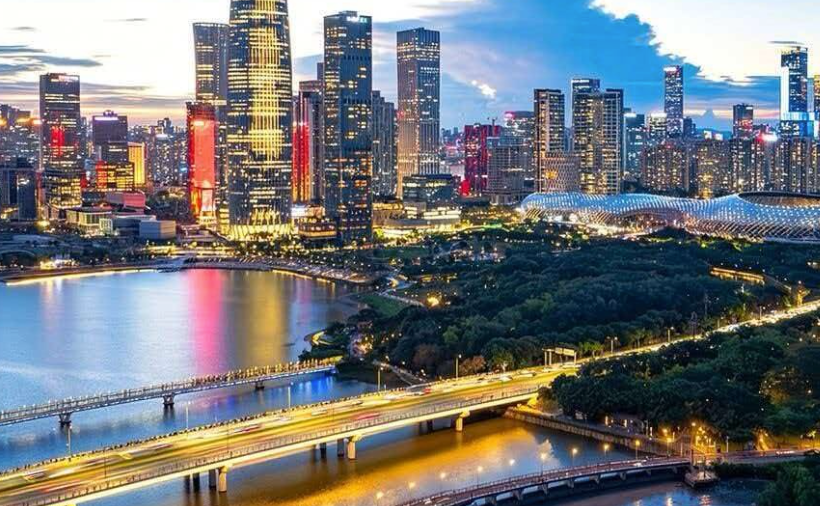
Shenzhen travel guide: why put this city on your China itinerary?
Xi’an for ancient capitals. Beijing for imperial landmarks. Shanghai for modern city life. Shenzhen for what comes next.
Each city offers more than a single label. Shenzhen has older neighborhoods and local traditions alongside its contemporary towers. Its appeal is the contrast: an electronics market in the afternoon, a waterfront walk at dusk, and a Cantonese meal after dark.
APEC 2026 offers a timely reason to look at the city, but the travel experience extends beyond the meeting. Choose Shenzhen if you enjoy urban design, technology, food, and public spaces. Travelers looking mainly for monumental imperial architecture may want to combine it with another Chinese destination.
Things to do in Shenzhen: build your visit around a few strong stops
A short trip works better with two or three anchors each day than a checklist spread across the entire city.
- Shenzhen Bay and Talent Park: Choose this area for waterfront paths and contemporary skyline views. Daylight reveals the parks; dusk changes the mood. Weather and visibility affect the view.
- Lianhuashan Park: Add green space and a different perspective on central Futian. Allow for walking and choose a route that suits your mobility and the weather.
- Huaqiangbei: Explore an area associated with electronics shopping. Browse first, then check specifications, compatibility, authenticity, and warranty terms before buying anything.
- Dongmen: Visit for a lively shopping district and casual food stops. Menus, opening hours, and the experience vary from street to street.
- OCT-LOFT: Consider this creative district for a slower-paced stop among converted industrial spaces, cafés, and cultural venues. Check current exhibitions and business hours before making a special journey.
These stops offer different sides of Shenzhen without requiring a theme-park ticket or an expensive shopping purchase to make the visit worthwhile.
Shenzhen hotels: choose the district before the room
The most useful hotel is one that reduces the travel you will repeat. Compare the exact address and nearest station, rather than relying on a broad neighborhood label.
| Area | A practical fit for | What to check before booking |
|---|---|---|
| Futian | A central-city itinerary with parks and urban landmarks | Station access, walking distance, and the route to your planned stops |
| Nanshan | Shenzhen Bay, Talent Park, and a waterfront-focused visit | The actual location within this large district and evening transport options |
| Luohu | Dongmen and an itinerary using the Luohu border crossing | Crossing choice, station connections, and the hotel’s check-in arrangements |
For Shenzhen hotels, compare the final room price, cancellation deadline, breakfast, and any deposit requirements. Ask the property directly about foreign-passport check-in and registration arrangements. Save its Chinese name, address, and phone number offline; an English booking confirmation alone may be less useful when asking for directions.
Shenzhen tour packages: compare the itinerary and inclusions
An independent visit offers flexibility. A guided outing can help if you want historical context, language support, or a route planned around particular interests.
When comparing Shenzhen tour packages, ask whether the quoted price includes a private or shared guide, transportation, attraction admission, meals, and hotel pickup. Confirm the guide’s language, group size, pickup boundary, walking requirements, cancellation terms, and time actually spent at each stop.
A day-tour package may cover only guiding and local transport; a multiday package can have a different scope. Check whether accommodation and any long-distance travel are included. A low advertised price is hard to assess without the exclusions. Also ask about compulsory shopping visits or optional activities that cost extra. Choose an itinerary that explains what you will experience, rather than one that simply lists the greatest number of landmarks.
A Shenzhen itinerary for two or three days
Day 1 — Futian and Huaqiangbei. Begin with Lianhuashan Park, then move to Huaqiangbei for browsing and a meal nearby. Keep the evening flexible instead of adding a distant attraction simply to fill the schedule.
Day 2 — Nanshan and the waterfront. Explore OCT-LOFT while venues are open, then make Shenzhen Bay or Talent Park your late-afternoon anchor. Leave room for a relaxed dinner and allow extra time for getting back to your hotel.
Optional Day 3 — Luohu and Dongmen. Use the additional day for neighborhood food, shopping, and a slower look at Dongmen. This can also suit travelers whose onward journey uses the Luohu crossing, provided they check luggage arrangements and crossing hours first.
Use this Shenzhen itinerary as a flexible planning example. Check the map from your actual hotel, current opening information, and transit conditions. A beach or Dapeng-area excursion is better treated as a separate outing than squeezed between central-city stops.
How to get to Shenzhen from Hong Kong
Travelers can arrive through Shenzhen’s airport or consider an itinerary involving Hong Kong. Rail, land crossings, and selected ferry services offer different possibilities; the useful choice depends on where you start and where you will stay.
Before deciding how to get to Shenzhen from Hong Kong, compare the departure terminal, mainland arrival point, ticket rules, luggage handling, operating hours, and onward journey. Check current operator information instead of assuming every route runs at the same frequency.
Hong Kong and mainland China have separate entry requirements. Permission to enter Hong Kong does not automatically authorize entry to Shenzhen. U.S.-passport travelers should check the current mainland visa rules for their exact journey. The National Immigration Administration lists the United States among countries eligible for its 240-hour visa-free transit policy. Eligibility also depends on an onward journey to a third country or region, confirmed onward travel, designated ports, and permitted stay areas. Check the current rules for your exact route with the authority, the relevant Chinese consulate, and your airline before buying nonrefundable tickets.
Shenzhen trip cost: build the budget from the full itinerary
Build a trip budget from transportation, hotels, local travel, meals, attraction tickets, and any guide fees. Separate an advertised package price from your likely total, including airport or border transfers, optional activities, and cancellation exposure. Check live quotes in the currency you will actually pay; this guide does not present a fixed-price offer.
Best time to visit Shenzhen: match the weather to your plans
For a visit built around walking, look for comfortable temperatures and a manageable rain forecast. Allow extra indoor time during hot, humid, or rainy periods. Shenzhen’s subtropical weather makes the forecast part of the itinerary. Allow for heat, humidity, and rain, and check official weather information for severe-weather disruption. Waterfront views depend on conditions, so keep an indoor alternative available. Around major events and holiday periods, compare actual availability and cancellation terms rather than assuming either a bargain or a shortage.
A short checklist before you book
- Confirm entry requirements: Review current Chinese official guidance and the U.S. State Department’s China travel information.
- Choose your anchors: Match the hotel district to the places you most want to visit.
- Check payment options: Confirm foreign-card acceptance, any mobile-wallet setup, and a backup payment method.
- Prepare for connectivity: Check roaming or eSIM arrangements and whether the maps, messaging, and other services you rely on will work as expected.
- Save practical details: Keep hotel information, reservations, travel-insurance contacts, and important documents available offline.
Start with a simple question: do you want skyline walks, technology markets, neighborhood food, or a little of each? Build the visit around that answer. APEC supplies the moment; a thoughtful itinerary makes Shenzhen a destination worth exploring on its own terms.
Sources and trip-planning resources
Source review: November 19, 2026. Recheck entry rules, opening hours, transport services, and booking terms before travel.
- APEC China 2026 — official Shenzhen city profile
Host-city context; city development and climate. - National Immigration Administration — visa-free transit policies, August 20, 2026
U.S. nationality coverage and conditional transit requirements. - Amazing Shenzhen — international city guide
Local visitor information and tourism planning. - Amazing Shenzhen — self-guided tours
Local route-planning resources. - Amazing Shenzhen — transport
Check current local transport and cross-border updates.