Exploring Senior Dinner Clubs for Singles: A Guide to Social Dining
For older adults navigating the social world or seeking companionship, senior dinner clubs for singles offer a welcoming and engaging environment. These groups combine culinary exploration with comfortable interaction, making it easier to meet like-minded individuals. Read on to learn how these clubs operate and where to find them.
After retirement, the loss of a long-time partner, or years of focusing on family and work, many people find that their social circle has quietly shrunk. Weekends can feel long. Restaurants can feel awkward when you’re dining alone. And the idea of joining a dating app can feel exhausting before you even start.
Senior dinner clubs for singles have grown in popularity for exactly this reason. They are low-pressure, food-centered gatherings where mature adults can enjoy a good meal, meet new people, and build friendships—or maybe something more—without the performative pressure of traditional dating.
What Is a Senior Dinner Club for Singles?
A senior dinner club is a group of single adults, typically aged 55 and older, who meet regularly to share meals at local restaurants. Unlike formal dating events, dinner clubs are social first and romantic second.
Members sign up for a month or a season of dinners. The group rotates between restaurants in the area—casual bistros, steakhouses, seafood spots, farm-to-table cafes, and ethnic restaurants. Each dinner is hosted by a coordinator who reserves a long table, manages the RSVPs, and often starts the evening with a brief icebreaker.
Some clubs are strictly social. Others lean more toward matchmaking. Most sit somewhere in between: friendly faces, good food, and room for a connection to develop naturally.
How a Typical Dinner Club Evening Works
Most senior dinner clubs follow a predictable, relaxed structure that removes the awkwardness of walking into a room full of strangers.
Arrival (6:00–6:30 PM) Guests arrive and are greeted by the host. There is usually a welcome drink or a short mingling period. Name tags help, but the tone is casual.
Seating (6:30 PM) Long tables are arranged so that everyone sits in easy view of one another. Many clubs intentionally mix up seating between courses so you end up chatting with different people.
Dinner (7:00–8:30 PM) Guests order from a set menu or the regular menu. The group shares appetizers, enjoys their main course, and often stays for dessert or coffee.
Wrap-up (8:30–9:00 PM) The host thanks everyone, announces the next restaurant, and encourages people to exchange contact info if they wish. No pressure to stay late.
Why Dinner Clubs Work Better Than Other Options
For older singles, traditional social pathways often fall short. Dinner clubs fill a gap that bars, dating apps, and church groups don’t quite reach.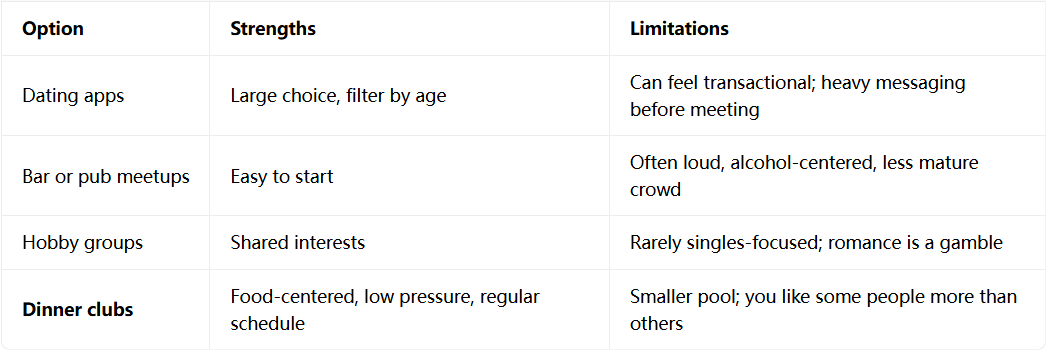
The magic of the dinner club format is that food is a natural conversation anchor. Discussing the menu, sharing a dish, or commenting on a wine takes the pressure off “performing” charm. People relax. Real personalities come through.
Real Benefits Beyond Romance
Even if you never meet a partner through a dinner club, the experience is worth it for many people.
1. Regular social contact Knowing you have dinner booked once or twice a week gives your week structure and something to look forward to.
2. Trying new restaurants Most members admit they would never have visited half the restaurants they now enjoy if the club hadn’t organized it.
3. Building a friend group Many dinner club regulars eventually form smaller subgroups—people who meet for matinees, day trips, or walking groups outside of dinners.
4. Rebuilding confidence If you’ve been out of the social scene for years, a low-stakes dinner is one of the gentlest ways to get comfortable talking to new people again.
5. Safety and respect Reputable dinner clubs vet members, set a respectful tone, and host in public restaurants. This is very different from meeting a stranger online.
What to Expect at Your First Dinner
If you’re nervous about your first evening, that is completely normal. Most first-timers feel exactly the same way.
Here is what actually happens, so there are no surprises:
- You will be the newcomer. The host will introduce you around. Regulars are usually genuinely happy to see a new face.
- You don’t have to talk to everyone. Start with the two people on either side of you.
- You pay for your own meal. Most clubs are transparent about this. Expect to pay for your food and drinks, plus a small membership fee.
- Dress is casual-smart. Nice jeans or slacks, a button-down or blouse. No need for a suit or evening gown.
- You can leave early if you want. There is no obligation to stay for the full evening.
- It is okay to come back alone. No one expects a romantic spark on night one.
A good motto: treat your first dinner like a friend group you haven’t met yet—not a first date.
How to Find a Dinner Club Near You
Finding a local chapter is usually easier than you think.
1. Search online communities Many dinner clubs advertise through dedicated singles-event websites, local activity directories, or meetup-style platforms. Search for phrases like “senior dinners,” “singles over 60 dining,” or “mature foodies.”
2. Ask at community centers and senior centers Many community centers partner with local restaurants to host regular singles dinners, especially in retirement-heavy areas.
3. Check with restaurants Some popular bistros and steakhouses host their own “single at six” or “empty nighter” nights. Ask the manager when you dine out.
4. Look for regional networks A few national organizations coordinate dinner clubs across multiple cities, with members rotating between chapters when they travel. These are especially useful if you snowbird or visit family in another region.
5. Ask friends Word of mouth is still how most dinner clubs grow. If a friend knows someone who “goes out to dinners with a fun group,” ask for an introduction.
Tips for Getting the Most Out of It
A few small habits will make your dinner club experience much better:
- Go at least three times before judging it. The first night is about getting comfortable. The second and third are where friendships start.
- Be curious, not auditioning. Ask people about their week, their favorite restaurant, their travels. Stop worrying about impressing anyone.
- Offer to help. Bringing a small appetizer, helping the host seat people, or thanking the waitstaff goes a long way.
- Respect boundaries. Not everyone is there to date. Some members are widowed and want companionship, not romance.
- Give feedback to the host. If you’d like to see more Italian places, or an earlier start time, say so. Good coordinators want to hear it.
- Keep safety common sense. Share your location with a friend on your first few outings. Meet in public. Never send money to someone you’ve only met at dinners.
Final Thoughts
Senior dinner clubs for singles fill a real and growing need: a place where older adults can eat well, meet genuine people, and build connection on their own timeline. There is no algorithm, no pressure, no awkward staring across a bar—just a long table, good food, and new faces.
Whether you’re looking for companionship, a weekly ritual, or a slow path back into dating after years away, a dinner club is one of the kindest ways to re-enter the social world.
If you’ve been eating dinner alone a little too often, this may be the sign you were waiting for. Look up a local chapter, sign up for one evening, and see who is already sitting at the table.