High-Paying HVAC Maintenance Positions for Residential Properties
Residential HVAC maintenance roles offer steady local demand and competitive pay 🏡. This guide covers job types, 2026 salary data, core duties, hiring criteria and career growth for trade job seekers.
Introduction
If you are searching for a stable, essential skilled trade career in 2026, residential HVAC maintenance positions deserve your attention 🛠️. These roles focus on preventive inspections, routine servicing and minor repairs for home heating and cooling systems. Unlike installation-focused technicians, HVAC maintenance specialists build long-term recurring service relationships with homeowners.
The residential HVAC sector continues to face a nationwide technician shortage. Every year, thousands of residential heating and cooling systems require seasonal tune-ups, filter replacement and system testing. This creates consistent job openings for both entry-level and experienced maintenance technicians, with reliable work throughout every season.
Why Choose Residential HVAC Maintenance Roles in 2026
Several key factors make these positions a solid career choice for trade workers:
- Year-round work stability: Summer AC checks and winter heating maintenance create continuous service demand 📈.
- Competitive compensation: Experienced maintenance techs earn solid hourly wages plus overtime during peak seasons.
- Low barrier to entry: Many employers provide on-the-job training for candidates with basic mechanical skills.
- Essential industry status: HVAC servicing will always be required for occupied homes, reducing layoff risks.
- Clear upgrade paths: You can gain certifications, move to senior technician or shift to self-employed contracting.
Types of Residential HVAC Maintenance Positions & Salary Comparison
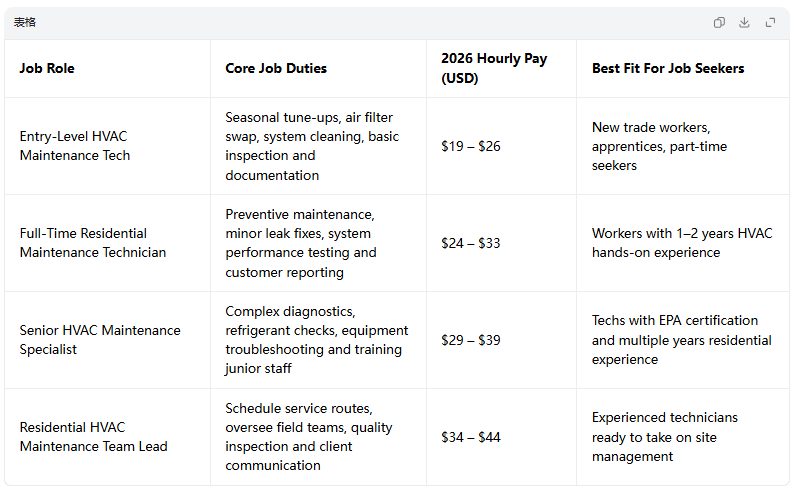
Different maintenance tracks have unique responsibilities and earning ranges. Review the table below to compare your options 📊.
Core Requirements for HVAC Maintenance Positions
Most residential HVAC employers look for these qualifications ✅:
- Basic mechanical knowledge of heating, air conditioning and heat pump systems.
- EPA 608 certification required for refrigerant handling on most full-time roles.
- Ability to safely work around residential equipment, follow safety guidelines.
- Valid driver license and clean driving record to travel between home service sites.
- Good communication to explain system issues and maintenance plans to homeowners.
- Physical stamina for bending, lifting equipment and working in tight utility spaces.
Key Benefits of HVAC Maintenance Careers
Maintenance-focused HVAC work brings unique perks compared to installation-heavy trade jobs 💡:
- More predictable daily schedules with fewer heavy tear-out projects.
- Repeat customer work, which reduces the stress of chasing new construction jobs.
- Less heavy lifting than full HVAC replacement work for many routine service visits.
- Steady overtime opportunities in spring and fall tune-up seasons.
- Certifications can boost your hourly pay significantly over time.
Common Job Challenges
Before applying, understand the real-world challenges of this occupation ⚠️:
- On-call emergency shifts for sudden residential HVAC breakdowns during extreme weather.
- Working in hot attics, cramped basements and dusty mechanical rooms.
- Constant learning to keep up with new smart thermostats and energy-efficient HVAC units.
- Some after-hours service calls may be required for urgent homeowner requests.
Career Growth Roadmap
There is a clear progression ladder for HVAC maintenance technicians 📈:
- Entry-level maintenance technician: Learn routine service tasks, build field experience.
- Certified full-time tech: Get EPA and NATE credentials, increase hourly pay and handle diagnostics.
- Senior specialist or team lead: Manage jobs, train new workers and earn leadership pay.
- Independent contractor: Start your own local residential HVAC maintenance business.
Final Thoughts
Residential HVAC maintenance positions are stable, essential skilled trade jobs for 2026 🏠. With year-round service demand, competitive wages and progressive career advancement, these roles are a strong option for anyone seeking long-term work in home service trades without a college degree.
Disclaimer: This article serves as general career guidance. Salaries, benefits and requirements differ by location and contractor. Confirm hiring rules before submitting applications.