Crypto Investing for New Investors: The Complete Practical Beginner Handbook
Crypto investing involves high volatility and numerous hidden pitfalls for newcomers. This handbook reviews major crypto asset types, core risks, practical ground rules and platform comparison tips to help new investors make sensible decisions.
Disclaimer: This content is for educational purposes only, not investment advice. Crypto assets are highly speculative, and you could lose your entire invested capital. Consult a qualified financial advisor before making any financial choices.
Introduction
Digital cryptocurrency has drawn massive attention from retail investors across Europe and North America. Operating 24‑7 without traditional market hours, crypto delivers unique opportunities but also extreme price swings, widespread scams, and shifting regional regulatory rules. Many first‑time participants jump into trading without basic background knowledge, which often leads to heavy unexpected losses. This guide walks new investors through common motivations, asset categories, actionable investing principles, unavoidable risks, and practical comparison tips for those just stepping into crypto markets.
Why New Investors Want to Explore Crypto Markets
Most beginners get into crypto for these typical reasons:
- Portfolio diversification: Add digital asset exposure alongside stocks, bonds, and other conventional investment holdings.
- Long‑term technology upside: Hoping to capture growth from mainstream blockchain technology adoption.
- Decentralized finance access: Access staking services, cross‑border transfers and innovative decentralized financial tools.
- Short‑term speculative gains: Trying to profit from fast price fluctuations; this approach carries very high risk for untrained newcomers.
Major Crypto Asset Types for First‑Time Investors
Each crypto category comes with distinct risk profiles. Use this table to quickly compare features, risk exposure, and beginner suitability.
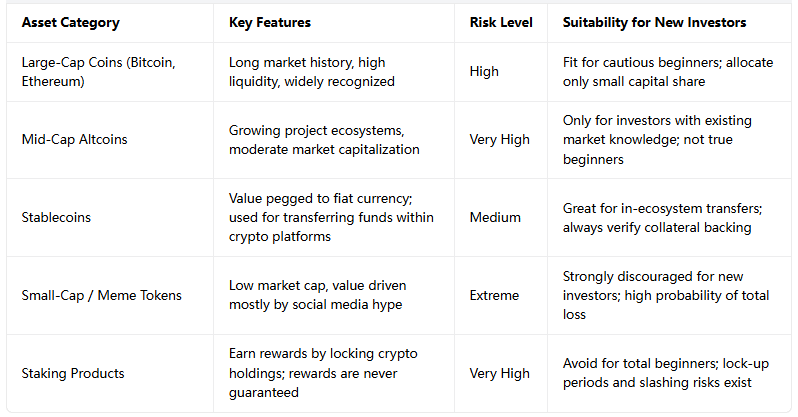
Core Investing Rules Every New Crypto Investor Should Follow
If you choose to explore crypto investing, stick to these ground rules to reduce unnecessary risk:
- Only invest disposable money: Never use rent, bill payments or emergency savings for crypto investments.
- Keep crypto a small portion of your total portfolio: Most financial experts recommend limiting crypto to a tiny fraction of overall assets.
- Complete independent research: Do not make buying decisions based purely on social hype or influencer profit promises.
- Prioritize account security: Enable two‑factor authentication, never leak seed phrases or private keys, and stay alert for phishing scams.
- Start with small positions: Test market behavior with low‑value trades before committing larger sums of money.
Critical Risks All Beginner Crypto Investors Must Recognize
Crypto markets contain hazards rarely seen in traditional investment markets:
- Severe price volatility: Sharp price ups and downs can happen within hours; large daily gains or losses are normal.
- Fraud and scam threats: Fake tokens, fraudulent platforms and phishing attacks specifically target inexperienced new investors.
- Changing regulatory landscape: Digital asset laws keep evolving across regions and may affect asset usability and market value.
- Custody danger: Lost private keys or compromised exchange services can cause permanent fund loss with almost no recovery options.
- Zero return guarantees: Past market performance does not guarantee future positive results.
Practical Takeaways for People New to Crypto Investing
- Study risks before purchasing: Potential returns always come paired with downside exposure; never underestimate possible losses.
- Stay away from leverage at the start: Margin and leveraged derivatives magnify losses rapidly; beginners should skip these products entirely.
- Compare service providers thoroughly: When picking an exchange, examine trading fees, security history, regulatory compliance and customer support quality.
- Understand local tax duties: Crypto trades may trigger tax reporting obligations in your area; maintain clear transaction records.
Final Thoughts for Aspiring Crypto Investors
Crypto investing opens doors to new digital financial opportunities, yet it remains one of the most speculative investment spaces available. Spend enough time learning fundamental concepts before putting real capital to work. Avoid impulse purchases triggered by viral online trends.
Numerous online resources allow you to compare crypto exchange fees, security records and user reviews quickly to filter more trustworthy service providers. Always keep in mind no investment is risk‑free, and crypto carries exceptionally high risk levels.