Teeth Whitening: Simple Ways to Get a Brighter Smile
A brighter smile can make a noticeable difference in how your teeth look and how confident you feel. If your teeth have become yellow or stained from coffee, tea, food, aging, or other everyday habits, there are several whitening options to consider. The right choice depends on how severe the discoloration is, what caused it, and how quickly you want to see a change.
Why Do Teeth Become Yellow?
Teeth naturally become less bright over time. Common causes include:
- Coffee and tea
- Red wine and dark-colored foods
- Smoking or tobacco use
- Natural aging
- Plaque buildup
- Certain medications
- Changes inside the tooth
Not every type of discoloration responds to the same whitening method.
First, Identify Your Type of Staining
Mostly surface stains?
Coffee, tea, wine, and food stains may respond well to whitening treatments.
Teeth becoming darker with age?
A professional whitening option may provide a more noticeable improvement.
One tooth looks darker than the others?
This can have a different cause and may need a dental evaluation rather than ordinary whitening.
Popular Teeth Whitening Options
1. Professional Teeth Whitening
Professional whitening is performed or supervised by a dental professional.
It can be a good option for people looking for a more noticeable change or who want their teeth evaluated before whitening.
Best for:
- Noticeable discoloration
- People wanting faster results
- People unsure which whitening option is appropriate
The cost and results can vary depending on the treatment and dental office.
2. Take-Home Whitening Trays
Take-home trays allow whitening to be done over multiple sessions rather than in a single appointment.
Depending on the system, trays may be professionally provided or purchased as an over-the-counter product.
Best for:
- People who prefer whitening at home
- Gradual whitening
- Maintaining a brighter smile
Following the product instructions is important, especially if you experience tooth sensitivity.
3. Whitening Strips
Whitening strips are one of the most accessible at-home options.
They typically use a peroxide-based whitening ingredient to help reduce certain types of stains.
Best for:
- Mild to moderate surface stains
- People looking for a convenient option
- Regular at-home maintenance
Results can vary, and some people may experience temporary sensitivity.
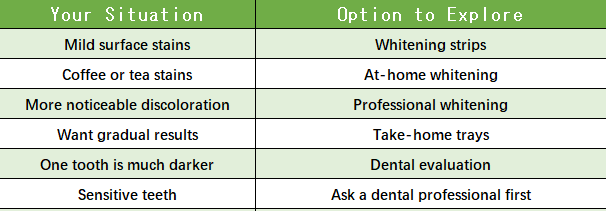
Which Whitening Option Should You Consider?
A simple way to compare your options:
What About Tooth Sensitivity?
Temporary sensitivity is one of the most common concerns with whitening.
You may notice sensitivity to:
- Cold drinks
- Hot foods
- Sweet foods
- Cold air
If sensitivity becomes uncomfortable, stop or reduce whitening and consider speaking with a dental professional.
People with existing dental problems may also need to address those issues before starting a whitening treatment.
Whitening Doesn't Change Everything
Whitening works best on natural tooth structure.
It may not whiten:
- Dental crowns
- Veneers
- Bridges
- Some fillings
- Other existing dental restorations
This is especially important if you have visible restorations on your front teeth.
A dental professional can help determine whether whitening is likely to produce an even result.
A Quick Smile Check
Before choosing a whitening option, ask yourself:
1. Are your teeth mainly stained from coffee, tea, or food?
→ An at-home whitening option may be worth exploring.
2. Do you want a more noticeable change?
→ Professional whitening may be an option to discuss.
3. Are your teeth already sensitive?
→ Consider getting professional advice before whitening.
4. Is only one tooth significantly darker?
→ Consider having the tooth evaluated first.
5. Do you have crowns, veneers, or fillings on visible teeth?
→ Ask how whitening could affect the overall color of your smile.
How to Keep Your Smile Brighter
After whitening, everyday habits can affect how long your results last.
Consider:
- Brushing twice a day
- Cleaning between your teeth
- Limiting frequent exposure to staining drinks
- Rinsing after coffee or other dark-colored beverages
- Keeping regular dental appointments
Whitening is not permanent, so maintenance may be needed over time.
Frequently Asked Questions
How long does teeth whitening last?
It varies from person to person. Your diet, oral hygiene, and the type of whitening treatment can all affect how long results remain noticeable.
Is professional whitening better than whitening strips?
Not necessarily for everyone. Professional treatment may provide a more controlled or noticeable result, while strips are convenient and generally more affordable.
Can yellow teeth become white again?
Many types of surface discoloration can be reduced with whitening. However, the result depends on the cause and severity of the discoloration.
Can whitening damage teeth?
When used according to professional or product instructions, whitening is generally considered safe for appropriate candidates. Temporary sensitivity or gum irritation can occur.
Should I whiten sensitive teeth?
If you already have significant sensitivity, it is a good idea to discuss your situation with a dental professional before starting a whitening treatment.
What is the best way to whiten teeth?
There is no single best method for everyone. The right option depends on your type of staining, sensitivity, existing dental work, budget, and desired results.
The Bottom Line
If your smile has become darker or stained, you have several options to explore—from convenient at-home whitening products to professional treatments.
The first step is understanding what is causing the discoloration and choosing an option that fits your teeth and your goals.