Smart Budget Travel Hacks 2026: Avoid Hidden Fees & Plan Affordable Trips
Hoping to travel more without overspending? This guide covers practical budget travel hacks, common booking traps, daily‑cost breakdowns and actionable planning tips for wallet‑friendly trips.
Rising flight, accommodation and tourist‑area prices make affordable travel feel challenging for many people. However, thoughtful planning and small daily choices can help you explore new destinations without overspending. Many travelers fall for misleading “ultra‑cheap” travel advertisements and end up paying unexpected hidden fees after booking. Budget travel does not mean sacrificing comfort or safety; it means prioritizing what matters most for your trip and cutting wasteful extra costs. Learning realistic spending ranges, avoiding common traps and picking suitable travel options helps you create memorable journeys that fit your financial limits.
Common Pitfalls for Budget Travelers
These frequent mistakes can blow your travel budget even with careful pre‑trip planning.
1. Ignoring hidden add‑on fees Low advertised flight or hotel prices often exclude baggage fees, resort charges, cleaning fees, airport surcharges and foreign transaction costs. These small extra charges quickly add up during one trip. Budget airlines are well‑known for separate fees for seat selection, carry‑on luggage and airport check‑in.
2. Over‑reliance on viral cheap‑travel advice Out‑of‑date online tips may no longer reflect real‑world prices in popular tourist spots. Some “budget” destinations have seen sharp price increases in recent years. Following old advice can lead to inaccurate budget expectations.
3. Poor timing and rigid travel dates Traveling during peak holiday or summer seasons drives up flight and accommodation costs significantly. Fixed dates and non‑flexible destination requirements remove most opportunities for discounted deals.
4. Under‑budgeting for on‑location daily expenses Many travelers only budget for flights and hotels, forgetting meals, local transit, attraction tickets and emergency spending money. Unexpected daily costs can easily derail your planned trip budget.
Main Approaches to Budget‑Friendly Travel
Four practical categories cover most budget‑travel strategies for different trip styles.
1. Smart Booking & Timing Strategies
Flexibility is your biggest money‑saving tool. Travel during shoulder seasons (between peak and off‑peak periods). Use fare‑alert tools to track flight price drops. Compare prices across multiple platforms and double‑check all extra fees before confirming any reservation. Mid‑week flights often cost less than weekend departures.
2. Budget‑Focused Accommodation Choices
Skip expensive chain hotels when possible. Options include hostel dorm or private rooms, local guesthouses, vacation‑rent private rooms and house‑sitting opportunities. Prioritize locations close to public transit to cut taxi or ride‑share expenses.
3. On‑Site Daily Savings Hacks
Eat at local markets and neighborhood eateries instead of tourist‑zone restaurants. Make full use of free city walking tours, public parks and free museum entry days. Use public transit or walking instead of private rides whenever safe and practical.
4. Financial Tools for Budget Travel
Choose payment cards with zero foreign‑transaction fees. Set aside a dedicated travel fund before departure. Track daily spending while traveling to avoid drifting past your planned limits. Travel insurance protects you from costly unexpected emergencies.
Real‑World Travel Cost Estimates by Travel Style
All values show per‑person daily spending, excluding long‑haul international flight tickets.
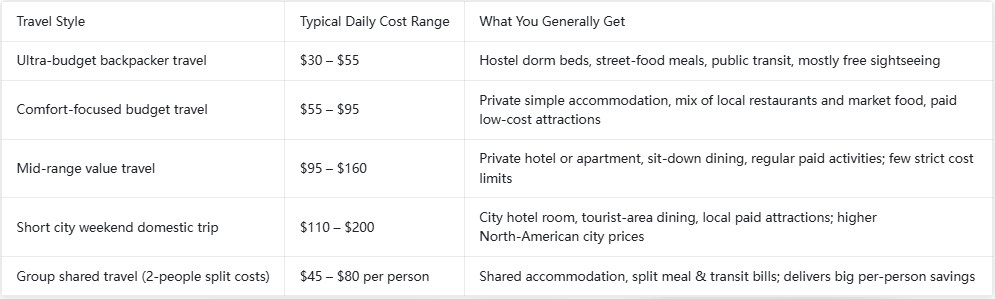
Popular tourist hot‑spots sit toward the higher end of each price bracket. Shoulder‑season travel can cut accommodation and activity costs by 25‑40%. Always confirm whether resort fees, cleaning charges or tourist taxes are included in quoted booking prices.
Key Points for Successful Budget Travel
1. Build your full trip budget before you book anything Break spending into clear buckets: transport, lodging, food, attractions and emergency funds. Do not only save money for flights and accommodation; set realistic expectations for daily spending at your destination.
2. Always calculate total all‑in cost, not just headline price For flights and lodging, add baggage, cleaning, resort and tax fees to the base price. A seemingly cheap offer can turn expensive once all mandatory add‑ons are included.
3. Match your choices to your priorities You do not need to cut every single expense. Spend money on experiences you care about, and save on parts of travel that matter less to you. For example, save on lodging so you can afford special local activities.
4. Prepare for unexpected travel costs Keep a small emergency travel buffer fund. Delays, minor medical needs or last‑minute transport changes happen on almost every trip. Travel insurance prevents huge unexpected financial shocks.
For Anyone Planning Budget‑Friendly Travel
Budget travel opens opportunities to explore more destinations without heavy financial pressure. There are practical options for backpackers, weekend city‑break visitors, couples and small groups. Your ideal travel plan depends on your available funds, trip length and personal comfort priorities. Always compare total costs and read real‑world traveler reviews before finalizing bookings. Online comparison resources make it quick to check deals, fee policies and traveler feedback to find suitable choices for your upcoming trip.