Before You Take an AI Course: 5 Things Beginners Should Know First
AI courses can be helpful, but picking the right one is easier when you know what you actually want to learn. Instead of jumping into every popular tool or tutorial, beginners should understand the basic skill paths, course types, and practical projects that make learning AI feel less confusing.
Learning AI sounds exciting until you open five course tabs and suddenly everything looks complicated. 😅
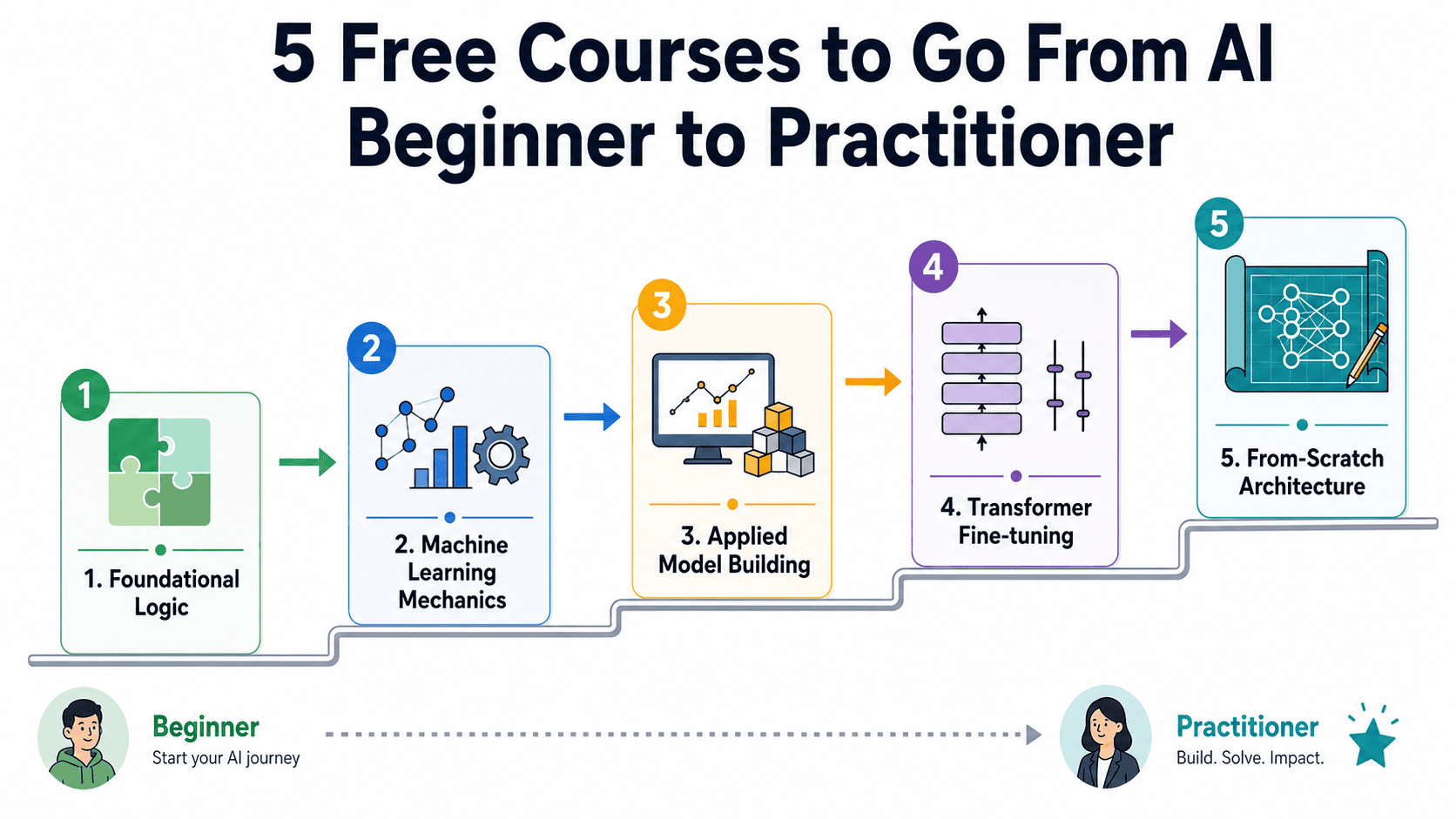
One course teaches ChatGPT.
Another teaches machine learning.
Another talks about automation.
Someone else says prompt engineering is the only skill you need.
So where do you even start?
The good news: you do not need to learn everything at once. A good AI course should help you build useful skills step by step, not make you feel lost before lesson one.
Here are 5 things to check before choosing one.
- Know Why You Want to Learn AI 🎯
Before picking a course, ask yourself what you want AI to help you do.
Your goal might be:
- Using AI tools better at work
- Starting freelance or side projects
- Learning automation
- Improving writing or content creation
- Understanding machine learning basics
- Building simple AI apps
- Moving toward a tech career
- Helping a business use AI more effectively
Different goals need different courses.
If you want to use AI at work, you may not need a deep math-heavy machine learning program right away.
If you want to become a machine learning engineer, a basic ChatGPT tutorial will not be enough.
Start with the goal, then choose the course.
- Beginner-Friendly Does Not Mean Too Basic 📚
A beginner course should be simple, but not empty.
Good beginner courses usually explain:
- What AI can and cannot do
- How large language models work at a basic level
- How to write better prompts
- How to use AI tools for real tasks
- How to check AI output
- Basic privacy and data safety
- Simple projects you can practice
Be careful with courses that only show trendy tools without explaining the thinking behind them.
Tools change fast.
Useful skills last longer.
- Pick a Course With Real Projects 🛠️
Watching lessons is not the same as learning.
A stronger AI course should give you small projects, such as:
- Writing better email drafts
- Creating a content calendar
- Summarizing documents
- Building a simple chatbot workflow
- Cleaning and organizing data
- Making a presentation with AI support
- Creating a resume or cover letter draft
- Automating a repetitive task
Projects help you turn lessons into something you can actually use.
If a course has no practice, it may feel good while watching, but hard to remember later.
- Do Not Ignore Data Privacy and Accuracy 🔍
AI can be useful, but it can also be wrong.
A good course should teach you how to review answers, check sources, and avoid pasting sensitive information into the wrong tools.
Look for lessons that mention:
- Hallucinations
- Bias
- Data privacy
- Source checking
- Human review
- Responsible use
- Workplace policies
Especially if you plan to use AI for work, clients, customers, or business decisions.
- Check the Certificate, But Do Not Chase It Blindly ✅
Certificates can help show that you completed training, especially when applying for jobs or adding skills to LinkedIn.
But the certificate is not the whole point.
Before paying for a certificate, check:
- Is the platform recognized?
- Does the course include real practice?
- Does it teach a skill you will actually use?
- Can you show projects, not just a badge?
- Does the course level match your current ability?
A certificate is more useful when it comes with skills you can explain and examples you can show.
Popular AI Course Paths 💡
Here are common learning paths beginners can consider:
AI for Beginners
Good for learning basic concepts, tools, and practical everyday uses.
Prompt Engineering
Helpful if you want better results from ChatGPT, Claude, Gemini, or similar tools.
AI for Business
Useful for managers, founders, marketers, sales teams, and operations teams.
AI Automation
Good for people who want to connect tools, save time, and build simple workflows.
Machine Learning Basics
Better for people interested in technical roles, data, coding, or model building.
AI Content Creation
Useful for writing, social media, video ideas, design support, and creator workflows.
What to Check Before Enrolling 📝
Before choosing an AI course, ask:
- Is it made for beginners or advanced learners?
- Does it match my goal?
- Are there projects or only videos?
- Is the instructor credible?
- Is the course updated recently?
- Does it explain safety and accuracy?
- Is the price clear?
- Can I preview lessons or read reviews?
A course does not need to be perfect. It just needs to match where you are starting and what you want to do next.
Final Thoughts
AI learning gets easier when you stop trying to learn everything at once.
Pick one goal. Choose one course that fits that goal. Practice with small projects. Then build from there.
The best AI course is not always the longest or most expensive one. It is the one that helps you understand the basics, use the tools with confidence, and keep learning without feeling overwhelmed.