💰 Personal Loans Guide — How to Compare Loan Options and Borrow Responsibly
A personal loan can be used for a variety of financial needs, such as managing a planned expense, consolidating existing debt, paying for home improvements, or covering other personal costs. However, borrowing money creates a financial obligation that normally includes regular payments and interest. Before choosing a loan, it is important to understand the total cost, repayment period, fees, and eligibility requirements.
💡 What Is a Personal Loan?
A personal loan is a type of financing in which a lender provides a specific amount of money to a borrower. The borrower then repays the amount over an agreed period, usually with interest.
Depending on the lender and loan product, important terms may include:
- Loan amount
- Interest rate
- Annual percentage rate
- Monthly payment
- Repayment period
- Origination fees
- Late payment fees
- Prepayment conditions
Loan terms can vary significantly between lenders, so comparing the complete offer is important.
🔎 What Should You Compare Before Applying?
Looking at the advertised interest rate alone may not provide a complete picture of the cost of borrowing.
1. Annual Percentage Rate
The annual percentage rate, commonly known as APR, is an important comparison point because it can reflect the interest rate and certain fees associated with a loan.
When comparing different offers, reviewing the APR can provide a clearer understanding of the overall financing cost.
2. Monthly Payment
The monthly payment determines how much of your regular budget will be committed to the loan.
A longer repayment period may reduce the monthly payment, but it can also result in more interest being paid over the life of the loan.
Consider both:
- Monthly payment
- Repayment period
- Total interest
- Total repayment amount
3. Total Cost
The total cost of borrowing can include more than the principal amount.
Potential costs may include:
- Interest
- Origination fees
- Administrative charges
- Late payment fees
- Other contractual costs
Reviewing the complete loan agreement can help identify these expenses.
🏦 Common Types of Loans
Different financing products serve different purposes.
Personal Loans
Personal loans can be used for a variety of personal expenses, depending on the lender's terms.
Debt Consolidation Loans
A debt consolidation loan may allow a borrower to combine multiple eligible debts into one payment.
However, consolidation does not automatically reduce the amount owed. The new interest rate, fees, repayment period, and total cost should be carefully compared with the existing debts.
Home Improvement Loans
Some borrowers use personal financing for renovations or repairs.
The appropriate financing option may depend on the project size, repayment period, and available loan terms.
Secured Loans
A secured loan is backed by an asset or collateral. Because the lender has an interest in the collateral, the terms can differ from those of unsecured financing.
Borrowers should understand the risks associated with using an asset as security.
📋 What Are Common Loan Requirements?
Lenders may consider several factors when reviewing a loan application.
These can include:
- Income
- Employment information
- Credit history
- Existing debt
- Monthly expenses
- Requested loan amount
- Repayment ability
Requirements vary between lenders and loan products.
Having accurate financial information available can make the application process easier.
📊 Fixed-Rate vs. Variable-Rate Loans
Interest structures can differ depending on the loan.
Fixed Rate
A fixed interest rate generally remains unchanged during the agreed period.
This can make monthly payments easier to anticipate.
Variable Rate
A variable interest rate may change according to the terms of the loan and relevant market conditions.
Before selecting this type of financing, borrowers should understand how potential rate changes could affect future payments.
⚠️ What Should You Watch Out For?
A loan should be considered as part of the overall household budget.
Before borrowing, consider:
- Whether the monthly payment is affordable
- The total repayment amount
- Existing financial obligations
- The consequences of missed payments
- Whether additional fees apply
- Whether early repayment is allowed and whether fees apply
Be particularly cautious about offers that emphasize immediate approval while providing limited information about the actual cost of borrowing.
🧮 How to Compare Loan Offers
A simple comparison can start with the following information:
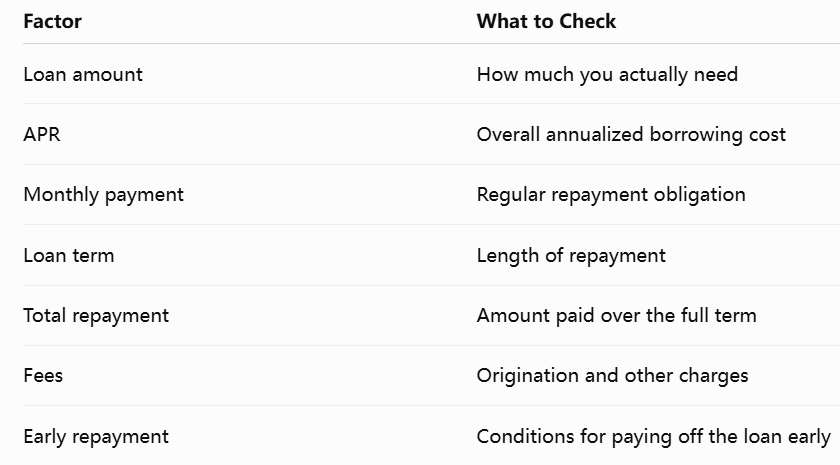
Comparing these factors side by side can make differences between loan offers easier to understand.
🔐 What to Review Before Signing
Before accepting a loan agreement, carefully review:
- APR
- Interest rate
- Monthly payment
- Repayment period
- Total repayment amount
- Origination fees
- Late payment conditions
- Prepayment terms
- Collateral requirements, if applicable
- Other contractual obligations
It is also useful to keep a copy of the final agreement for future reference.
❓ Frequently Asked Questions
Is a personal loan suitable for everyone?
No. Whether borrowing is appropriate depends on an individual's financial circumstances, income, existing obligations, and ability to make the required payments.
Is a lower monthly payment always better?
Not necessarily. A lower payment may result from a longer repayment period, which can increase the total amount of interest paid.
What is more important, the interest rate or APR?
Both are useful, but APR can provide a broader comparison because it may incorporate certain fees in addition to the interest rate.
Can a loan application be declined?
Yes. Lenders may evaluate factors such as credit history, income, existing debt, and repayment ability before making a lending decision.
Should I compare several loan offers?
Comparing multiple offers can help you understand differences in rates, fees, repayment periods, and total costs.
📌 Conclusion
Loans can provide access to financing for a variety of personal needs, but borrowing should be approached carefully.
Before selecting a loan, compare the APR, interest rate, monthly payment, repayment period, fees, and total repayment amount rather than focusing on a single advertised figure.
Understanding the full cost and ensuring that the repayment fits comfortably within your budget can help you make a more informed borrowing decision.