Essential Backup Power Devices for South African Homes
A power interruption can happen at an inconvenient time. The lights go out, the Wi-Fi stops working, a phone may be running low on battery, and a fan or other essential device suddenly becomes unavailable. This is why small backup power products have become useful household equipment in South Africa. You do not always need a large generator or a complete solar installation. For many everyday situations, a compact rechargeable device can be enough to keep one important function working.
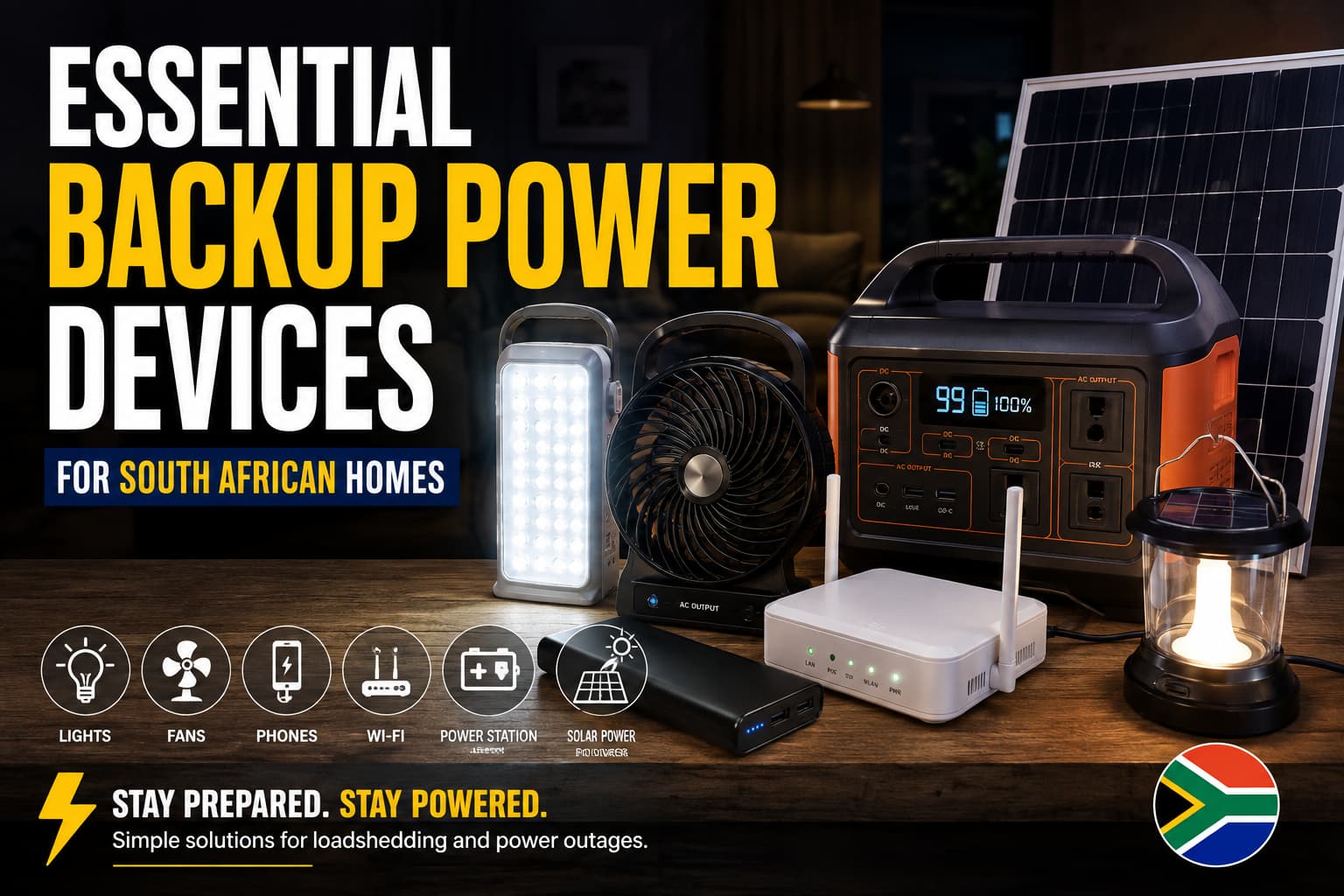
1. Rechargeable Emergency Lights
When the electricity goes off, lighting is usually the first problem people notice.
A rechargeable emergency light can provide immediate illumination without relying on disposable batteries.
Depending on the design, these lights can be used in:
- Bedrooms
- Living rooms
- Kitchens
- Hallways
- Garages
- Outdoor areas
Some models can remain connected to a power source while charging and automatically switch to battery operation when the electricity supply is interrupted.
For households looking for a simple emergency solution, this is one of the easiest devices to start with.
2. Portable LED and Solar Lights
A portable light can be even more convenient because it can be moved wherever it is needed.
Solar-powered models add another option.
During the day, a solar panel can recharge the battery, while the stored energy can be used later when lighting is required.
This makes solar lights useful not only for electricity interruptions but also for:
- Outdoor activities
- Camping
- Gardens
- Security lighting
- Garages
- Areas without convenient power outlets
For a small device, the combination of solar charging + rechargeable battery + LED lighting can provide a surprisingly practical backup solution.
3. Rechargeable Fans
Electricity problems are not only about darkness.
During warm weather, losing access to a fan can make a room uncomfortable very quickly.
A rechargeable fan can continue operating using its internal battery instead of depending directly on a wall outlet.
Portable fans are particularly useful because they can be moved between rooms and can also be used outdoors.
When choosing one, consider:
- Battery capacity
- Operating time
- Charging method
- Fan speed
- Noise level
- Portability
USB charging can also make a fan easier to recharge using a power bank or portable power station.
4. Power Banks for Phones
A smartphone can become much more important when the electricity supply is interrupted.
It may be needed for:
- Calls
- Messages
- Internet access
- Maps
- Work
- Banking
- Emergency communication
A power bank provides a simple way to keep a phone charged without a wall outlet.
For everyday use, compact models are convenient. For longer backup periods, higher-capacity power banks can provide multiple charges.
Some emergency power banks also include built-in LED lights, combining two useful functions in one device.
5. Mini UPS for Wi-Fi
For people who work or study from home, keeping the internet connection running can be more important than keeping every appliance powered.
A small UPS designed for networking equipment can provide backup power to devices such as:
- Wi-Fi routers
- Fibre ONT devices
- Modems
- Small network equipment
This can allow the internet connection to remain available during a short interruption, provided the network service itself remains operational.
A compact UPS can therefore be a practical alternative to buying a large backup system when the main priority is simply staying connected.
6. Portable Power Stations
When several small devices need power, a portable power station becomes more useful.
Unlike a standard power bank, a portable power station can offer multiple outputs for different types of equipment.
Depending on its capacity, it may be used for:
- Phones
- Laptops
- Wi-Fi equipment
- Lights
- Fans
- Small electronics
- Other low-power appliances
Many modern portable power stations can also be recharged from solar panels.
This creates a simple system:
Solar → Battery → Devices
Portable power stations are already marketed in South Africa specifically as backup solutions for essential devices during blackouts.
7. Small Solar Backup Devices
Solar equipment does not always have to mean installing panels on an entire roof.
Small solar products can include:
- Solar lanterns
- Solar lights
- Small solar chargers
- Portable solar panels
- Solar power banks
- Solar-powered emergency devices
These products are particularly interesting because they combine two functions:
Generate energy + store energy
For a household that wants a simple backup option without installing a complete solar system, smaller solar equipment can be an easier starting point.
8. A Simple Emergency Power Kit
A household does not necessarily need one expensive product.
Several smaller devices can work together.
For example:
Rechargeable Light
→ keeps the room illuminated
Power Bank
→ keeps the phone charged
Mini UPS
→ keeps Wi-Fi equipment running
Rechargeable Fan
→ provides airflow
Portable Power Station
→ provides a larger backup source for several devices
This type of setup can cover many of the everyday problems caused by an unexpected electricity interruption.
What Should You Buy First?
The best device depends on what becomes most inconvenient when the power goes off.
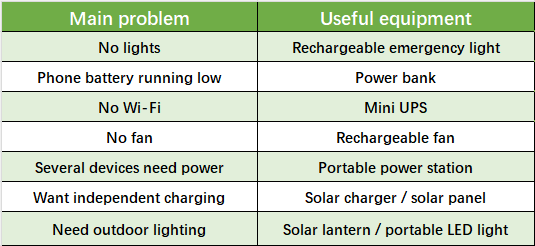
The important point is that you do not necessarily need to start with the most expensive solution.
A small device that solves one important problem can sometimes be more practical than purchasing a large system that is rarely used.
How to Choose a Backup Device
Before buying, check a few basic specifications.
Battery Capacity
A larger battery generally provides more stored energy, but it can also mean a heavier and more expensive device.
Charging Options
USB, wall charging and solar charging offer different levels of convenience.
If you want additional flexibility, look for products supporting more than one charging method.
Runtime
Do not look only at the battery capacity.
The actual operating time depends on how much power the connected device consumes.
Portability
For emergency equipment, being easy to move can be an important advantage.
A small light or fan that can be carried from one room to another may be more useful than a larger device that stays in one location.
Number of Outputs
For power banks and portable power stations, check how many devices can be connected at the same time.
Final Thoughts
Backup power does not always have to mean a generator, large inverter or full home solar installation.
For many everyday situations, smaller devices can provide a simple first layer of protection.
A rechargeable light can solve the problem of darkness.
A power bank can keep a phone working.
A mini UPS can maintain Wi-Fi.
A rechargeable fan can provide airflow.
A portable power station can bring several of these functions together.
The right combination depends on the devices that matter most in your home.
For South African households, building a practical backup setup can therefore start with something as simple as one rechargeable light, one power bank and one small backup power device.