Recruitment Agencies for Offshore Oil Platforms in the US
Every month, more than 77,000 men and women step onto helicopters in Texas, fly over the Gulf, and trade two weeks of normal life for 12-hour shifts on steel islands that never sleep. Behind that quiet shuffle stands a trio of powerhouse recruiters who quietly keep the whole dance moving: Airswift, NES Fircroft, and Core Group Resources....
...Together they staff rigs from Texas to Trinidad, run 60 offices in 102 countries, and still find time to handle visas, payroll, and the famous 14-on/14-off rotations that Gulf of Mexico operators swear by.
Airswift alone has placed 77,850 oil and gas specialists since 2022, moving engineers, electricians, and even chefs through a pipeline that starts in Houston and ends on platforms floating 200 miles offshore. NES Fircroft brings half a century of platform pedigree, while Core Group Resources keeps captains, ROV pilots, and welders on speed-dial for urgent crew swaps. These agencies do far more than post jobs; they act as full mobility shops, booking flights, arranging survival training, and guaranteeing every worker clears immigration before the chopper lifts off.
For Texans eyeing offshore cash without the hassle of paperwork, recruitment agencies for offshore oil platforms in the US are the fast lane. They front the certification fees, track the medical renewals, and keep a standby pool of rig-ready talent so Chevron, BP, and Anadarko can staff a 100-person platform in under a week. The payoff for workers is a pay ladder that starts around $50k for rookies and climbs past $250k for seasoned installation managers—plus half the year off.
Ready to see what happens once an agency picks you? In the next section we’ll step onto the deck and break down exactly what a 14-on/14-off hitch looks like, hour by hour.
How Work on Oil Platforms Is Organized
Picture a steel island in the Gulf of Mexico that runs on a calendar: fourteen sun-ups on, fourteen sunsets off, then repeat all year. This 14-on/14-off rhythm is the heartbeat of how work on oil platforms is organized, and it keeps about 200 crewmates moving through 12-hour shifts without ever leaving the site.
The Gulf supplies 97 % of all U.S. Outer Continental Shelf oil and gas, so platforms there double as self-sufficient micro-cities. Each one carries cabins, a gym, desalination plants, cafeterias and even movie rooms so crews can stay fed, rested and safe while the ocean roars outside.
- 14-on/14-off is the classic Texas-Gulf rotation; 21-on/21-off appears on remote or project rigs
- 12-hour shifts run day and night, often 6 a.m.–6 p.m. and vice versa
- Crews live on board in shared or private cabins; alcohol and non-prescription drugs are banned
- Helicopters or crew boats shuttle everyone to shore at change-out day
- Platforms generate their own power, clean their own water and store weeks of food
Because the schedule is fixed, planners treat each person like a chess piece: every roustabout, crane hand or subsea engineer must arrive certified, medically fit and ready to jump into a role that has been scripted down to the minute. The next section shows exactly who fits where on that living board.
Roles and Tasks on Oil Platforms Explained
Every offshore story starts with a roustabout hauling a length of drill pipe across the deck. From that first gritty step you can climb all the way to the OIM, the Offshore Installation Manager who signs every permit and keeps the whole city-at-sea safe. In between sits a tidy ladder of roles and tasks on oil platforms, each with its own pay rung, safety ticket, and time-in-grade.
The 14-on/14-off swing and 12-hour shifts never change, but the paycheck does—fast. A green roustabout with a high-school diploma and a BOSIET card can clear $50k. Stay fit, earn your IWCF well-control cert, and five promotions later an OIM can bank $250k. Recruiters like Airswift and NES Fircroft move 77,000-plus workers through this exact path every year.
The drilling ladder: from roustabout to OIM
Drilling crews own the most famous promotion track. Each step up adds responsibility, hazard pay, and another safety certificate. Most moves take one to two seasons if you keep your nose clean and your back strong.
- Roustabout (0–1 yr) – $50k–$65k – BOSIET, OGUK medical
- Roughneck (1–2 yr) – $60k–$80k – IWCF Intro
- Derrickhand (2–3 yr) – $70k–$90k – IWCF Surface
- Driller (3–5 yr) – $90k–$120k – IWCF Supervisor
- Toolpusher (5–8 yr) – $110k–$150k – Well Control + Leadership
- OIM (8 yr plus) – $140k–$250k – OIM License, years of record
Agencies keep the ladder stocked. When a driller is needed in the Gulf, Airswift pulls from its 9,000-contractor pool. When Angola LNG needed 600 hands, 100 were non-technical staff who still met the same safety vetting.
Marine, ROV, and camp life
Not everyone turns a wrench on the drill floor. Marine crew keep the 200-person floating city on station: Dynamic Positioning Operators, ballast control officers, ROV pilots guiding subsea robots, and captains who swap out anchor chains in 6,000 ft of water. Chefs and medics keep the humans fed and patched; both roles earn north of $65k and carry the same BOSIET badge as the roughnecks they cook for or patch up.
Every one of these roles is recruited through the same agencies already introduced, and every one feeds the next section: the pay ladder that makes the hardship worthwhile.
Work Environment on Oil Platforms Explained
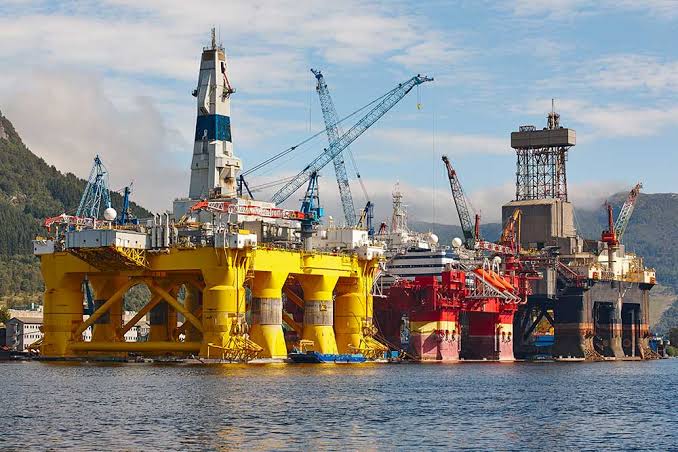
Picture sunrise over the Gulf: you buckle into a helicopter seat, headset on, and lift off for the 100-mile ride to a steel city that never sleeps. That dawn hop is the daily commute for crews on a 14-on/14-off rotation, and it sets the tone for life where work, rest, and play all happen above the waves.
Once the bird touches down, the platform rules take over. Alcohol and non-prescription drugs stay onshore; cabins may be shared or private, but every room locks away personal gear because space is tight. Wi-Fi and a 24-hour gym keep boredom at bay, and the galley serves hot meals around the clock so no one goes hungry after a 12-hour shift.
A Day in the Life
Crews rise, eat, and head to their stations. Twelve-hour shifts run day and night, with hand-offs logged in detail so the next team knows every valve position and pressure reading. Between shifts, workers hit the gym, call home over video chat, or catch a movie in the rec room. The platform hums with generators, cranes, and the steady beat of the drill.
Coping with Hazards
The Bureau of Safety and Environmental Enforcement notes that 60 percent of offshore fatalities come from being struck by moving objects or caught between equipment.
Drones now scan high decks and flare stacks, cutting fall-risk exposure by 75 percent compared with human crews on scaffolding. Still, every person straps on a hard hat, safety glasses, and steel-toed boots before stepping outside the accommodation block.
Surviving this environment starts with certified safety training. BOSIET certificates, offshore medicals, and rig-specific inductions are the price of admission, and every drill—from fire to man-overboard—keeps the skills fresh. Master those basics, and the steel city becomes a second home instead of a hazard zone.
Functions in the Offshore Oil Sector in the US
Picture the Gulf of Mexico at dawn: a steel city rises from the water, helicopters buzz overhead, and a hidden ballet of permits, royalties, and production targets is already in motion. So who owns the seabed, who says yes to the drill bit, and who collects the checks? The answer sits inside the three big levers of the U.S. offshore system: BOEM leases the blocks, BSEE watches every safety bolt, and the Treasury cashes the royalty checks that flow from the Gulf of Mexico, which quietly supplies 97 percent of all U.S. Outer Continental Shelf oil and gas.
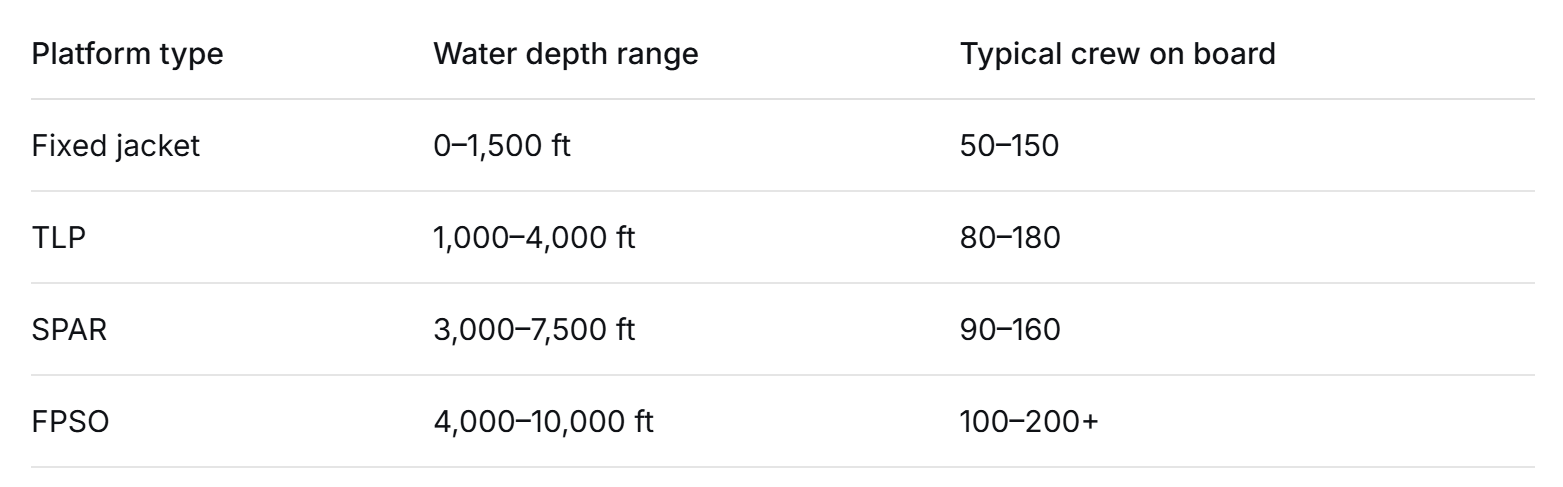
Those leases start with BOEM auctions of federal tracts—often miles-long spreadsheets of watery real estate—where oil companies bid bonuses and commit to 18.75 percent royalties on every barrel that eventually flows. Once a lease is won, operators pick from a menu of platform types that match the water depth and reservoir size. Fixed steel jackets work down to about 1,500 ft of water, while compliant towers and tension-leg platforms stretch between 1,000 and 4,000 ft. For the true deepwater frontier, single-cylinder SPARs and ship-shaped FPSOs can operate beyond 5,000 ft, tying back subsea wells through manifolds and export pipelines.
Safety oversight moves to BSEE once drilling begins. Inspectors review well designs, witness blowout-preponder tests, and can issue fines up to $48,000 per violation per day. Overlapping layers—remotely operated vehicles, real-time data centers onshore, and mandatory “time-out for safety” cards—keep the human-error rate trending downward, even as wells reach 20,000 psi and cost $100 million apiece.
All of these functions need people—mechanics who rebuild mud pumps, marine techs who inspect lifeboats, reservoir engineers who tweak flow models, and catering crews who serve midnight steaks. If the rotation life, 12-hour shifts, and $50k–$250k pay ladder sound like your speed, the next question is simple: how do you actually get hired?
Recruitment Agencies for Oil Platforms: Step-by-Step Hiring Flow
How does a résumé turn into a helicopter seat? U.S. offshore recruiters like Airswift and NES Fircroft move 77,000 plus workers every year through a clear funnel that starts with one click and ends on a 14-on/14-off rotation.
The process is friendly but strict. Agencies first screen your CV for sea time, tech skills, and safety certs. Next they verify your BOSIET certification and OPITO standards; without them you stop here. If the paperwork glows green, you move to a short agency interview, then a client interview, and finally mobilization where visas, travel, and medicals are sorted.
- CV upload and keyword screen
- Safety-cert check: BOSIET, OPITO, offshore medical
- Agency video interview
- Client interview with rig superintendent
- Offer and contract sign
- Mobilization: flights, visas, crew-change date
- First 12-hour shift onboard
Airswift boasts a 100 percent compliance record on 50-expat mobilizations for ExxonMobil’s Zafiro Field, while NES Fircroft keeps on-site hiring offices inside Energy Corridor, Houston so you can shake a recruiter’s hand the same day you clear medical.
Once you pass the medical, pack light. The agency books your heli-seat, uploads your certs to the rig’s system, and gives you a report-time on the dock. Step onto the platform, trade your passport for a bunk card, and the safety officer runs you through a quick muster.
Your first 14-day hitch starts at the next crew change, looping you back into the rotation cycle that keeps rigs staffed and paychecks rolling every two weeks.
Disclaimer: The prices mentioned in this article are based on publicly available data and reflect the prices as of [Apr 16, 2026]. Prices are subject to change without notice. This information is provided for general informational purposes only. No rights may be derived from it, and we disclaim all liability for any actions or decisions based on this content.